

Table of Contents
- What Is a Minimalist Capsule Wardrobe and Why It Matters
- How to Declutter Your Wardrobe Before You Start
- Building Your Capsule Wardrobe Checklist for 2026
- Choosing Quality Fabrics for a Durable Wardrobe
- Sustainable Fashion Brands in Australia: Aligning Your Wardrobe With Your Values
- Creating Cohesive Outfits From Your Capsule Collection
- Maintaining Your Minimalist Capsule Long-Term
- Frequently Asked Questions
What Is a Minimalist Capsule Wardrobe and Why It Matters
A minimalist capsule wardrobe is a curated collection of essential, versatile pieces that work together to create multiple outfits with minimal items. The core principle is simple: quality over quantity, intentionality over impulse, and timelessness over trends.
The appeal lies in simplicity. Instead of a wardrobe that overwhelms you with options, a capsule collection forces intentional decision-making. You reach for pieces you genuinely wear, pieces that fit well, and pieces that align with your actual lifestyle. For busy parents juggling school runs and weekend activities, professionals moving between the gym and the office, or anyone seeking a simplified approach to getting dressed, a minimalist capsule wardrobe removes friction from your day.
Building a minimalist capsule wardrobe in 2026 means prioritising durability and versatility over fast-fashion cycles. The pieces you invest in should transition seamlessly across seasons, settings, and life demands. At MIVA Clothing, we understand this philosophy, our Australian-designed collection focuses on considered fabrics and relaxed fits that work across active and relaxed lifestyles, reducing the need to constantly refresh your wardrobe.
The real benefit emerges over time. A smaller, thoughtfully curated collection means fewer decisions each morning, less clutter in your space, and ultimately, more confidence in what you're wearing. You stop buying items that sit unworn. You stop chasing trends that don't serve your life. You start wearing what you own.
How to Declutter Your Wardrobe Before You Start
Before you build something new, you need to clear the space, both physically and mentally. Most people skip this step, which is why they end up with another cluttered wardrobe in two years.
Start by removing everything from your wardrobe. Yes, everything. Lay it on your bed or across a clean space. This sounds drastic, but it forces you to confront what you actually own and what you've been ignoring.
Sort into three piles: keep, donate, and discard. The sorting criteria should be ruthless but honest. Ask yourself these questions for each item:
- Do I wear this at least once every three months?
- Does it fit my body right now, without alterations?
- Is it in good condition, or does it need repair?
- Does it align with my actual lifestyle and aesthetic?
- Would I buy it again today?
If the answer to any of these is no, it doesn't belong in your capsule.
The donate pile should go to charity shops or textile recyclers. The discard pile, items too worn or damaged for donation, should go to textile recyclers that handle worn-out clothing responsibly. This matters. Fast fashion has created a textile waste crisis, and being intentional about disposal is part of building a sustainable wardrobe.
Once you've sorted, you'll have your baseline. This is your starting point. Don't be surprised if it's smaller than you expected. That's the point. You're removing the noise so you can see what actually works.
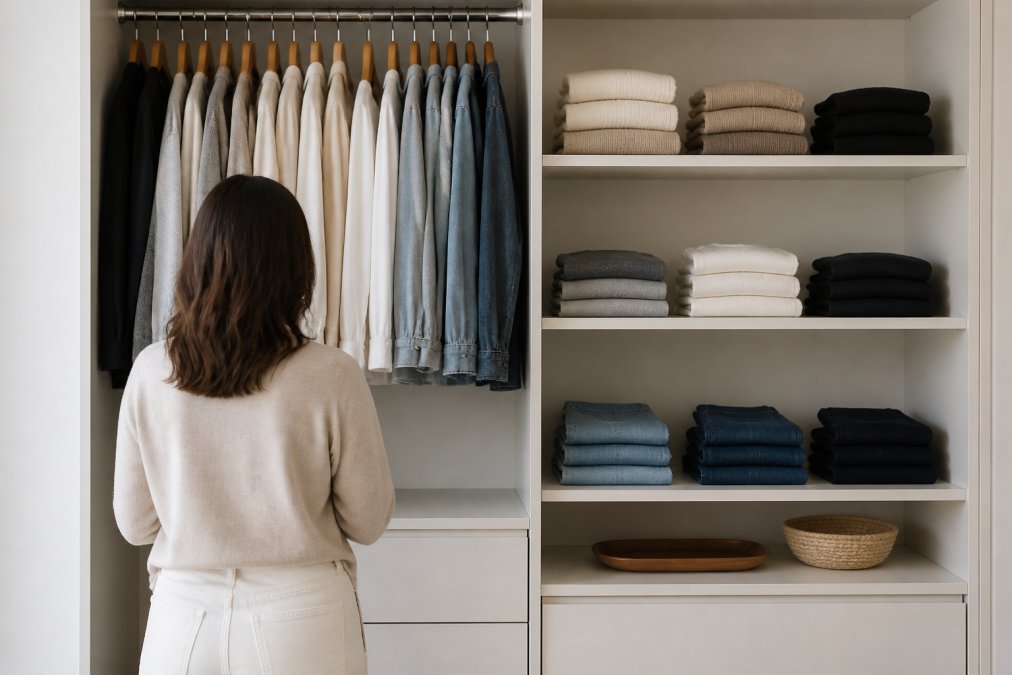
Building Your Capsule Wardrobe Checklist for 2026
A functional minimalist capsule wardrobe typically contains 30-50 pieces, depending on your climate and lifestyle.
Essential Basics
Your foundation starts with basics in neutral colours. These are the pieces that anchor every outfit: white, cream, black, navy, grey, and earth tones like olive and camel.
A white t-shirt is non-negotiable. Get one that fits your body well and is made from fabric that lasts. Cotton or cotton-blend basics hold up better than cheaper alternatives that pill and fade. A black t-shirt serves the same function, it's your workhorse piece.
Add a cream or white long-sleeved top. This bridges seasons and works under layering pieces. A grey basics tee gives you a neutral option that's slightly warmer than white but still versatile.
Consider adding a simple white shirt or oxford cloth shirt. This piece elevates casual outfits and works in professional settings. Look for relaxed fits that move with you rather than rigid, tailored cuts that feel restrictive.
Basics should be comfortable enough for the school run but polished enough for work. MIVA Clothing's approach to basics emphasises considered fabrics that maintain their shape and colour through repeated wearing and washing.
Layering Pieces
Layering pieces extend your outfit combinations and help you transition between seasons without buying entirely new wardrobes.
A lightweight windbreaker in a neutral colour works over everything. Cream, grey, or camel cardigans layer seamlessly with basics and add warmth without bulk. Choose one with a relaxed fit that doesn't cling to your body.
A simple jumper in a neutral shade provides another layering option. Merino wool or wool-blend jumpers breathe better than synthetic alternatives and regulate temperature effectively (peer-reviewed research). This is where investing in quality pays dividends, a good jumper lasts years, while cheaper versions pill and lose shape quickly.
Consider a lightweight overshirt or linen shirt. These pieces layer over basics and work as standalone tops on warmer days. Overshirts in neutral tones or subtle patterns add visual interest without compromising versatility.
Bottoms That Work Together
Your bottoms should all work with your tops. This is where many people fail, they buy bottoms in different styles or colours that don't coordinate, creating the illusion of more outfit options than actually exist.
Dark denim is foundational. A well-fitting pair of dark jeans works in nearly every context, casual, professional, active. Look for a cut that flatters your body and fabric that doesn't stretch out after wearing. Quality denim holds its shape and colour.
Black trousers or tailored trousers add formality when you need it. These work for professional settings and elevate casual tops. Choose a relaxed fit over skinny cuts, they're more comfortable and age better.
Neutral joggers or comfortable trousers work for casual days and active pursuits. These bridge gym wear and everyday wear, which is essential for people moving between multiple contexts throughout the day.
Consider one pair of shorts in a neutral tone for warmer months. Fleece or cotton shorts in black, navy, or khaki work with your tops and extend your wardrobe seasonally.
Outerwear and Transitional Pieces
Outerwear is where durability becomes critical. Invest in pieces that work across seasons and years.
A lightweight jacket in a neutral colour works year-round. Linen, cotton, or lightweight wool jackets layer over everything and provide protection without bulk. These pieces transition from spring through autumn.
A heavier winter coat in black or navy provides warmth without dominating your colour palette. Choose structured fabrics that hold their shape and won't wrinkle excessively. This is the one piece where you can spend more, a quality coat lasts a decade.
Consider a bomber or utility jacket for casual styling. These pieces add visual interest and work across multiple outfit combinations. Neutral colours ensure they pair with everything.
Choosing Quality Fabrics for a Durable Wardrobe
The difference between a capsule wardrobe that lasts five years and one that lasts five months comes down to fabric choice.
Natural fibres, cotton, linen, wool, and silk, outperform synthetics in durability, breathability, and longevity (peer-reviewed research). Cotton holds colour better, linen becomes softer with washing, wool regulates temperature naturally, and silk drapes beautifully. These fabrics age gracefully rather than degrading.
Synthetic fabrics like polyester and acrylic pill, lose shape, and trap moisture. They're cheaper upfront, which is why fast fashion relies on them. But they cost more over time because you replace them constantly.
Blend fabrics offer compromise. A cotton-polyester blend might be 80% cotton with 20% polyester for durability. A wool-silk blend combines wool's warmth with silk's drape. Read labels carefully and prioritise natural fibre content.
Weight matters too. Heavier fabrics, denser cotton, thicker wool, withstand repeated wearing and washing better than lightweight alternatives. A 300-gram cotton t-shirt outlasts a 150-gram one significantly.
Pay attention to construction. Seams should be straight and secure. Hems should be finished cleanly. Buttons should be sewn on properly. These details determine whether a piece survives fifty washes or falls apart after ten.
Sustainable Fashion Brands in Australia: Aligning Your Wardrobe With Your Values
Building a minimalist capsule wardrobe creates the opportunity to align your consumption with your values. Instead of buying from dozens of brands, you're choosing a few carefully.
Look for brands that prioritise durability and transparency. Know where your clothes are made and what they're made from. Australian-designed brands often provide this information more readily than international fast-fashion retailers.
Consider the brand's approach to fabrics. Do they use natural fibres? Do they test durability? Do they stand behind their products? MIVA Clothing, for example, focuses on considered fabrics and relaxed fits designed to last, with Australian design and a commitment to pieces that actually move with your lifestyle rather than constraining it.
Certifications matter, but they're not everything. Look for brands that explain their processes rather than hiding behind vague claims. Transparency is more meaningful than a single certification.
Support brands that offer repair services or replacement programmes. A brand confident in durability will stand behind products when something fails.
Building your capsule from a smaller number of intentional brands simplifies decision-making and strengthens your wardrobe's cohesion. You understand the brand's aesthetic, fit, and quality standards, making future purchases faster and more reliable.
Creating Cohesive Outfits From Your Capsule Collection
The entire point of a minimalist capsule wardrobe is that every piece works with most others. But this requires intentional planning.
Lay out potential outfits before you finish building your capsule. Take your basics and bottoms and create five different outfits. If you can't, your collection isn't cohesive yet. Add pieces that bridge gaps.
Document your outfits. Take photos of combinations that work. This becomes your reference when you're tired in the morning and need to get dressed quickly. You're not reinventing combinations every day, you're choosing from proven options.
Accessories extend combinations without adding bulk. A simple cap, a belt, or sunglasses the tone of an outfit. But keep accessories minimal and neutral too. Silver or gold jewellery, scarves in your core colours, belts in black or brown, these work across your entire collection.
Shoes are critical. You need at minimum: comfortable everyday shoes (trainers or flats), professional shoes (loafers or structured flats), and one casual option (sandals or slip-ons). All should work with your colour palette. Black trainers and black professional shoes work with nearly everything.
Test your combinations in real life. Wear outfits you've planned. Notice what actually feels comfortable, what actually works in your daily context, and what you reach for repeatedly. This feedback refines your collection over time.
Maintaining Your Minimalist Capsule Long-Term
A capsule wardrobe requires different care than a fast-fashion wardrobe. You're maintaining fewer pieces, so each one needs to last.
Wash less frequently. Jeans don't need washing after every wear. Tops can often be worn twice before washing. Jumpers need washing only every few wears. Reducing wash frequency extends fabric life significantly (peer-reviewed research).
Use gentle detergents designed for natural fibres. Harsh chemicals break down fabric fibres and fade colours. Cold water washing is gentler than hot water. Air drying is gentler than machine drying.
Fold rather than hang most items. Hangers stretch out shoulder seams over time, particularly for heavier pieces. Folding preserves shape better.
Repair immediately. A loose button, a small hole, or a fraying seam is easy to fix when caught early. Ignoring these issues turns minor problems into reasons to discard pieces. Keep a simple sewing kit and address issues as they arise.
Refresh pieces seasonally. Rotate your collection based on weather. Store off-season pieces properly, clean, dry, and protected from moths. This extends the life of pieces you're not currently wearing.
Reassess annually. Each year, review what you actually wore. Did certain pieces sit unworn? Are there gaps in your collection? Did any pieces fail or deteriorate? Use this information to refine future purchases.
Building a minimalist capsule wardrobe requires intentionality, but it pays dividends in simplicity and confidence. You spend less time deciding what to wear, less money replacing worn-out pieces, and more time actually living your life. At MIVA Clothing, we've designed our collection around this principle, Australian-designed pieces in considered fabrics with relaxed fits that work across your actual life, not just Instagram aesthetics. Invest in pieces that move with you, last through seasons, and make you feel genuinely confident. Shop the collection and discover how fewer, better pieces transform your daily routine.
Frequently Asked Questions
What are the essential items for a minimalist capsule wardrobe in 2026?
A solid minimalist capsule wardrobe starts with neutral basics: white and black t-shirts, plain long-sleeve tops, well-fitting jeans, neutral trousers, and a simple jumper or two. Add layering pieces like hoodies and windbreakers, then include outerwear suited to your climate. Aim for a colour palette of 3-4 neutrals (black, white, grey, beige) with one accent colour. Include one pair each of everyday shoes, trainers, and smart shoes. These core pieces create dozens of outfit combinations without excess.
How many items should be in a minimalist capsule wardrobe?
A functional minimalist capsule typically contains 30-50 pieces, though the exact number depends on your lifestyle and climate. Active professionals juggling gym and office wear may need closer to 50 pieces, whilst those with simpler routines might thrive with 30. Focus on quality over quantity—pieces that work together, fit well, and last years. Each item should earn its place by working with at least three other pieces in your wardrobe. This is where Miva Clothing come in to it.
How do I know if sustainable fashion brands in Australia offer genuine quality, or are they just marketing hype?
Look beyond claims and check fabric composition, construction details, and return policies. Brands committed to sustainability typically publish information about their supply chain, materials sourcing, and manufacturing practices. Read customer reviews mentioning durability and longevity, not just style. Australian-designed pieces often emphasise local production and ethical labour practices. Request detailed product information before purchasing, and check return policies so you can verify fit and quality firsthand.
Can a minimalist capsule wardrobe actually work for someone with an active lifestyle?
Yes, absolutely. The key is choosing pieces designed for movement and versatility. Select fabrics that handle both gym sessions and everyday wear—breathable cottons, stretchy blends, and performance materials work across contexts. Include pieces that transition from active to casual: joggers that look polished, trainers that pair with work trousers, and tops that work under blazers or on their own. This approach eliminates the need for separate 'gym' and 'office' wardrobes whilst maintaining both comfort and professionalism.